Why The Right Jonathan's Landing Real Estate Purchase Can Still Lose You Money
Advisory John Holland September 9, 2026
Advisory John Holland September 9, 2026
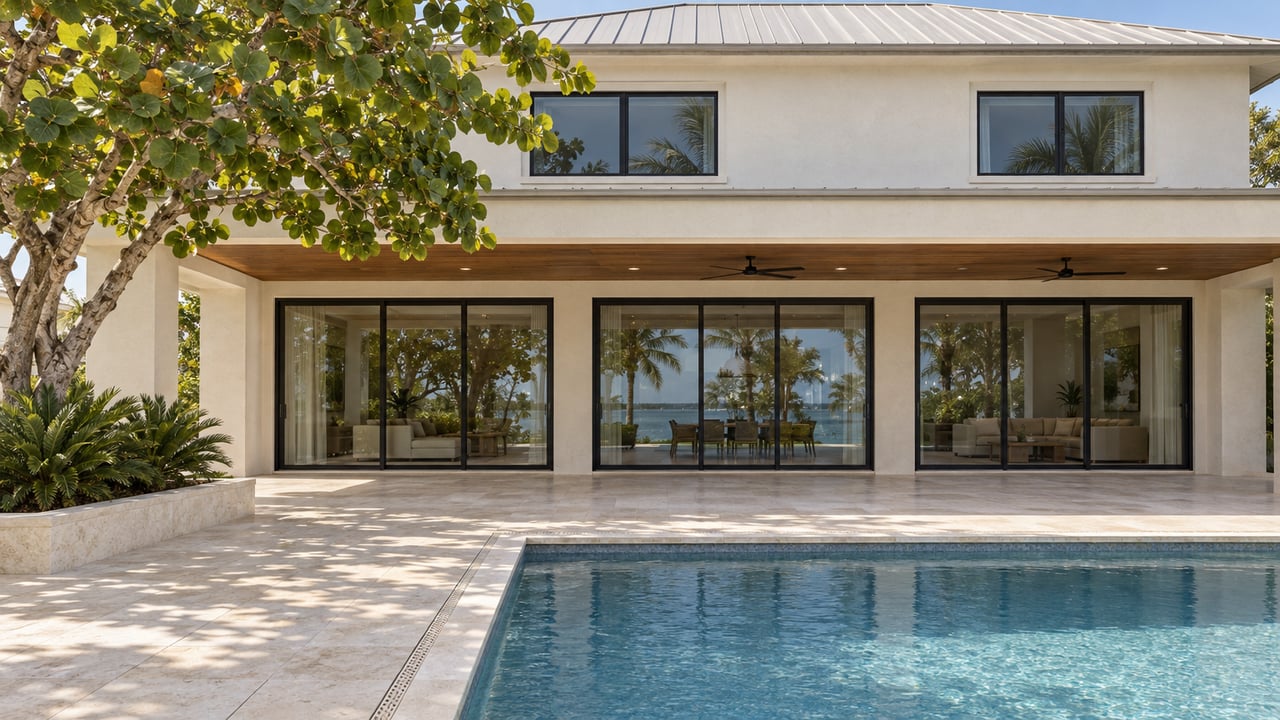
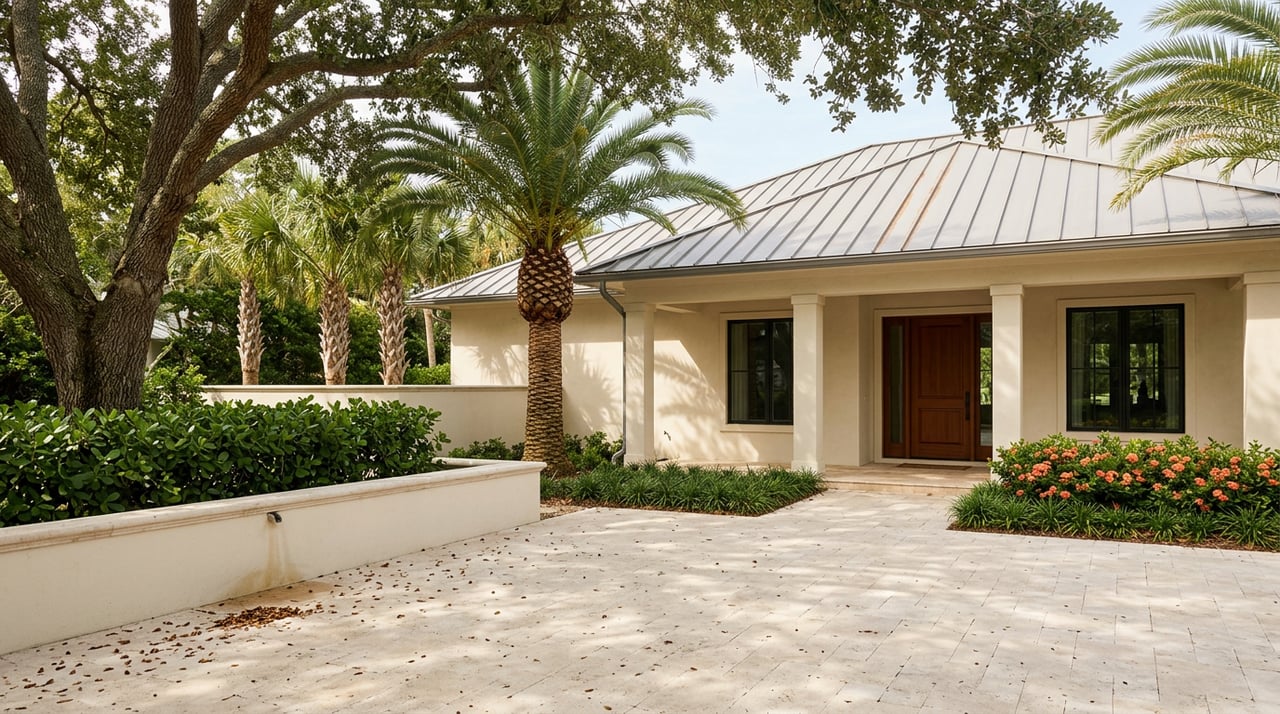
Jonathan’s Landing is a remarkable place to own in Jupiter, FL.
Six hundred acres along the Intracoastal Waterway, championship golf, boating, deep-water dockage with a clean run to the Jupiter Inlet and Atlantic Ocean, with no fixed bridges, and homes ranging from seasonal condos and townhouses to multimillion-dollar waterfront estates.
The clubhouses, tennis courts, fine dining, social events, and waterfront living, are all amenities that are part of the appeal, too.
Unfortunately, that high quality Florida living has also caught the attention of the market.
Because when you buy Jonathan’s Landing real estate, you’re not simply buying a beautiful place to live on the map. You’re acquiring a multimillion-dollar asset. One exposed to salt, storms, aging systems, maintenance decisions, warranties, and association requirements.
Its value doesn’t take care of itself, and that’s where the real challenge begins.
The purchase gets months of attention.
Buyers have agents, inspections, negotiations, and professional guidance focused on getting the right property at the right price.
Then closing happens, and the professional attention largely ends.
But in reality, what happens over the next five, ten, or fifteen years can have just as much impact on what that property is worth when it comes time to sell.
The solution is to treat ownership with the same level of intention as the purchase.
Knowing what to maintain, what to change, what to avoid, and when to act, with the long-term value of the asset always in view.
In a community like Jonathan’s landing, the representation that gets you the home is only the beginning.
The real results come from keeping it worth what you paid.

When you tour a waterfront estate or condominium located in Jonathan's Landing, your attention goes where it should: the dock, the mature palms, the quiet cul de sacs, the vaulted ceilings, the floor plan, the intimate community, the finished living spaces, and of course how it measures up to a listing a community over.
That's the part of the decision you can see.
The part you can't see is what the home asks of you after closing. Waterfront properties at this price run on systems that quietly determine its future value. Climate equipment, a generator, dock lifts, the pool, the roof and impact glass rated for Florida storms. Nearly all of them carry warranties, and most of those warranties hold only when you can document that the upkeep actually happened.
Jonathan's Landing adds its own set of requirements as well. The HOA sets standards for how a home is maintained and presented, and those standards follow the property for as long as you own it, not just through the sale.
None of this is a reason to hesitate.
It's simply the work that starts the day you take the keys. That work is hardest on the owners least able to stand over it in person, the seasonal residents and out-of-state buyers who can't be there to check that a job was done right.
And that distance, between owning a home and actually overseeing it, is where its value starts slipping long before anyone lists it for sale.
Everything above is financially manageable while you own a remarkable residence in Jonathan’s Landing. When it becomes expensive is on the day you sell it.
Here's how that day goes.
The buyer hires an inspector, and that inspector spends three or four hours doing something no one has done since you moved in: putting the condition of your home in writing.
The generator has no service history.
The seawall shows movement.
The boat lifts were serviced by someone whose name you can't recall, and the air handler is fourteen years old and you're fairly sure it was maintained, but "fairly sure" isn't an answer anyone can act on.
Notice what's really happening there.
The problem isn't the age of the equipment, or that you don't have an exceptional waterfront estate. It's that you can't account for it. A buyer paying several million dollars is looking for reasons to feel certain, and every unexplained item does the opposite.
The reason this happens often isn't neglect, it's structure.
Most brokerages close the sale, collect the commission, and disappear. Leaving you spending the next several years coordinating vendors yourself, with no system holding the record together, and you arrive at the market with a home that was genuinely cared for and no way to demonstrate it.
A home doesn't lose its value in a dramatic moment.
It leaks value quietly, over years, through a hundred small neglects nobody notices until the inspection. And that outcome is rarely decided by luck and almost never by money.
It comes down to one thing, whether the owner, from day one, treated the property as an asset to be managed or just a place to live.
Managing it well asks for three things at once.
Upkeep on a real schedule, vendors who actually do the work right, and a record of the home's condition that still makes sense to a potential buyer five years from now.
Miss one and the other two stop counting. A generator you've serviced every year but never wrote down reads, on an inspection report, exactly like one left to rust.
That's hard enough when you live there. It's harder still when you're seasonal or out of state, trying to look after your most complicated asset from a thousand miles away, managing it one vendor and one invoice at a time.
So what actually holds a home's value together? The answer lies in four things.
Documentation from week one. Maintenance done on a schedule, before things break instead of after. Pricing that’s kept honest by vendors who answer to more than one homeowner and know it.
And the one that matters most, representation that treats the home as an asset from the day you buy it to the day you sell it, not just until the deal closes.

Most real estate ends at the closing table. Holland Real Estate & Home Advisory was built to treat it as the starting line, and being an advisor that stays with the property the whole time you own it. It's a model we perfected over two decades in Jupiter's private communities, watching the same pattern repeat. Good homes lose value not because they're neglected, but because no one puts their care on the record.
Establishing a Documented Baseline
The most valuable move for a home's future value happens in the first few weeks, while everything is fresh and nothing is in question yet. Our team walks you through building a documented baseline of the home's systems, condition, and history, and connects you to the vetted professionals who capture it right.
Do it early and you own something most sellers never have. A verifiable record of the home from the day it became yours. That's the difference between telling a future buyer the home was cared for and showing them.
The Home Hub as a Living Record
From there, the record lives in one place. Our Home Hub holds warranties, service history, scopes of work, costs, and every repair or upgrade, organized instead of scattered across drawers, inboxes, and memory.
The value isn't the filing. It's what the filing gives you. Clarity while you live there, leverage when something goes wrong, and proof when it's time to sell. The generator you serviced every year finally reads on paper exactly as well as it ran.
Advisory Backed by Proof
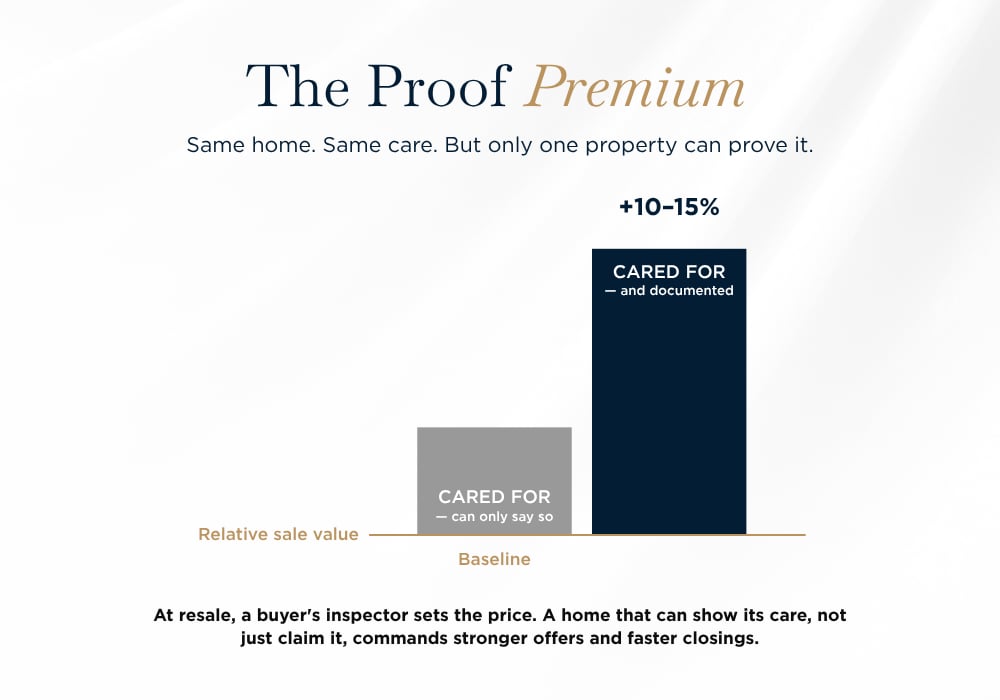
Because you've had advisory guidance and vetted vendor access the whole time you owned the home, it doesn't arrive at market as a question. It arrives as a proven asset. Buyers pay for certainty, and a home that can show its own care commands stronger offers and faster closings. The value was always there. The record is what lets you keep it.
People come to Jonathan's Landing for a life that is hard to find anywhere else, where a morning on a championship course and an afternoon running the prestigious intracoastal waterway belong to the same day.
That effortless Florida living is why the search starts, and it’s easy to let it stand in for the whole decision. Across every Jonathan’s Landing community — West Bay, Cape Pointe, Bridgegate, Lantern Bay, and Casseekey Island — finding the home is where the work begins, not where it ends.
The home that can offer you the lifestyle you’re looking for is also a substantial asset, and it holds its value the way any asset does, through care that is documented and kept on the record from the first week.
Owners who keep those records can prove the home was cared for. The rest can only say so, and at resale, when a buyer's inspector is the one setting the price, proof is worth far more than your word.
That’s why the decision that protects your investment comes at the start, not the day you list. What you want isn’t an agent to sell the home once, but an advisor who treats a Jonathan's Landing home as the asset it is, from the day you buy it to the day you sell it.
If you’re buying or already own in Jonathan's Landing, that’s the conversation worth having. Contact Holland Real Estate & Home Advisory about protecting your home's value through a single system built to hold it, from purchase through ownership to resale.
We pride ourselves in providing personalized solutions that bring our clients closer to their dream properties and enhance their long-term wealth.